

How SEO Helps E-Commerce Websites Increase Sales in 2026

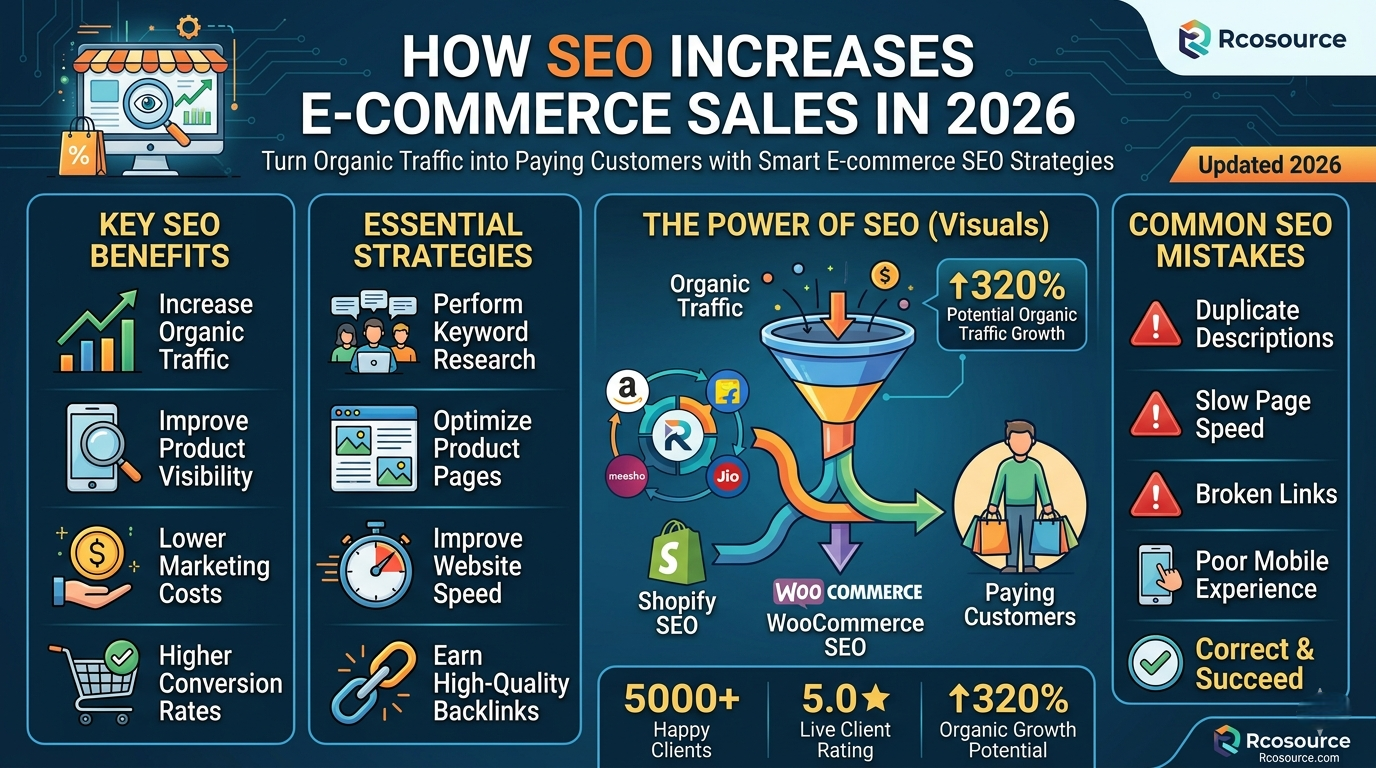
How SEO Helps E-Commerce Websites Increase Sales in 2026
Launching a store is the easy part. The real challenge is getting found by people who are already searching for what you sell. Here's how a strong SEO strategy turns organic traffic into paying customers — and why it keeps paying off long after the work is done.
Why SEO compounds and paid ads don't
Launching an e-commerce website is only the first step toward building a successful online business. The real challenge is attracting customers who are actively searching for your products. Thousands of online stores compete for attention every day, and without a strong Search Engine Optimization (SEO) strategy, even the best products can remain invisible.
E-commerce SEO helps your website rank higher in search results, attract qualified visitors, and convert more shoppers into customers. Whether your store runs on Shopify, WooCommerce, or another platform, professional SEO can meaningfully improve both visibility and long-term sales.
What Is E-commerce SEO?
The process of optimizing an online store so products, categories, and pages appear higher in search results — earning long-term organic traffic instead of renting it.
5 Ways SEO Increases Sales
Millions of shoppers start their buying journey with a search engine. If you're not on page one, you're losing customers to whoever is.
Increase Organic Traffic
Organic visitors arrive through search rather than ads, and usually carry higher purchase intent because they're actively looking for what you sell. Ranking for the right keywords brings in customers who are already ready to buy.
Improve Product Visibility
Every product page is a chance to rank on Google. SEO-friendly titles, detailed descriptions, relevant keywords, optimized images, structured data, and internal links all combine to make listings appear in more searches.
Better User Experience Improves Rankings
Google rewards sites with fast loading speed, mobile responsiveness, easy navigation, secure HTTPS, and clear structure. A better shopping experience improves both your ranking and your customer's satisfaction.
Higher Conversion Rates
SEO isn't only about attracting visitors — it's about attracting the right ones. When users search with specific buying intent and land on a relevant product page, they're far more likely to complete the purchase.
Lower Marketing Costs
Paid ads generate traffic only while the campaign runs. SEO keeps attracting visitors long after the optimization work is finished — meaning lower acquisition costs and better ROI over time.
SEO for Shopify & WooCommerce
Both platforms offer a strong foundation — but each needs its own optimization approach to actually compete.
Why Shopify Stores Need SEO
Shopify offers a strong technical foundation, but stores still need deliberate optimization to compete against established players.
Optimizing WooCommerce for Search Engines
WooCommerce offers excellent flexibility for SEO — when it's configured correctly, it can compete with much larger retailers.
Best SEO Practices for E-commerce
A practical sequence, in the order that builds on itself.
Perform Keyword Research
Identify the keywords customers actually search before you create a single product page.
Optimize Product Pages
Create informative, keyword-rich pages that answer the questions customers already have.
Improve Website Speed
Fast websites rank better in search results and convert more of the visitors they attract.
Create Helpful Blog Content
Educational content attracts new customers earlier in their journey and supports product rankings.
Optimize Images
Compress every image and write descriptive alt text to improve both speed and visibility.
Build Internal Links
Connect products, categories, and blog articles to improve both navigation and SEO signals.
Earn High-Quality Backlinks
Authoritative backlinks improve domain authority and push your rankings higher over time.
Mistakes That Hurt Rankings
Correcting these issues alone can meaningfully improve where you rank.
How Rcosource Helps You Rank Higher
SEO needs ongoing optimization and monitoring — not a one-time setup.
Research & Technical SEO
Keyword research, technical SEO audits, and on-page SEO that fix the foundation before chasing rankings.
Shopify & WooCommerce SEO
Platform-specific optimization for product pages, collections, categories, and site speed.
Content & Link Building
Content marketing and a link-building strategy that compound your authority month over month.
Frequently Asked Questions
E-commerce SEO is the process of optimizing online stores, product pages, and category pages to improve rankings in search engine results.
SEO helps Shopify stores attract organic traffic, improve search visibility, and increase online sales without relying only on paid advertising.
Yes. WooCommerce is highly SEO-friendly when optimized with proper technical settings, quality content, and keyword-focused product pages.
Most businesses begin seeing measurable improvements within 3 to 6 months, while long-term optimization delivers continuous growth over time.
Yes. Better rankings bring more qualified visitors to your website, leading to higher conversions, increased revenue, and long-term business growth.
Ready to Turn Search Traffic Into Sales?
From keyword research and technical audits to Shopify and WooCommerce SEO — Rcosource builds the organic growth engine your store needs.
Conclusion
SEO is one of the most effective long-term investments an e-commerce business can make. By optimizing product pages, improving website performance, targeting the right keywords, and creating valuable content, businesses attract more qualified visitors and convert them into loyal customers.
Whether you're running a Shopify store or a WooCommerce website, a strong SEO strategy increases visibility, reduces marketing costs, and drives sustainable sales growth for years to come.